Fintech migration: Flutter
to React Native
Migrated a fintech mobile app from Flutter to React Native with Expo. In three months, we rebuilt the application, preserved its core functionality, and expanded the platform with onboarding, KYC, card management, and multi-source payment capabilities.
Business context
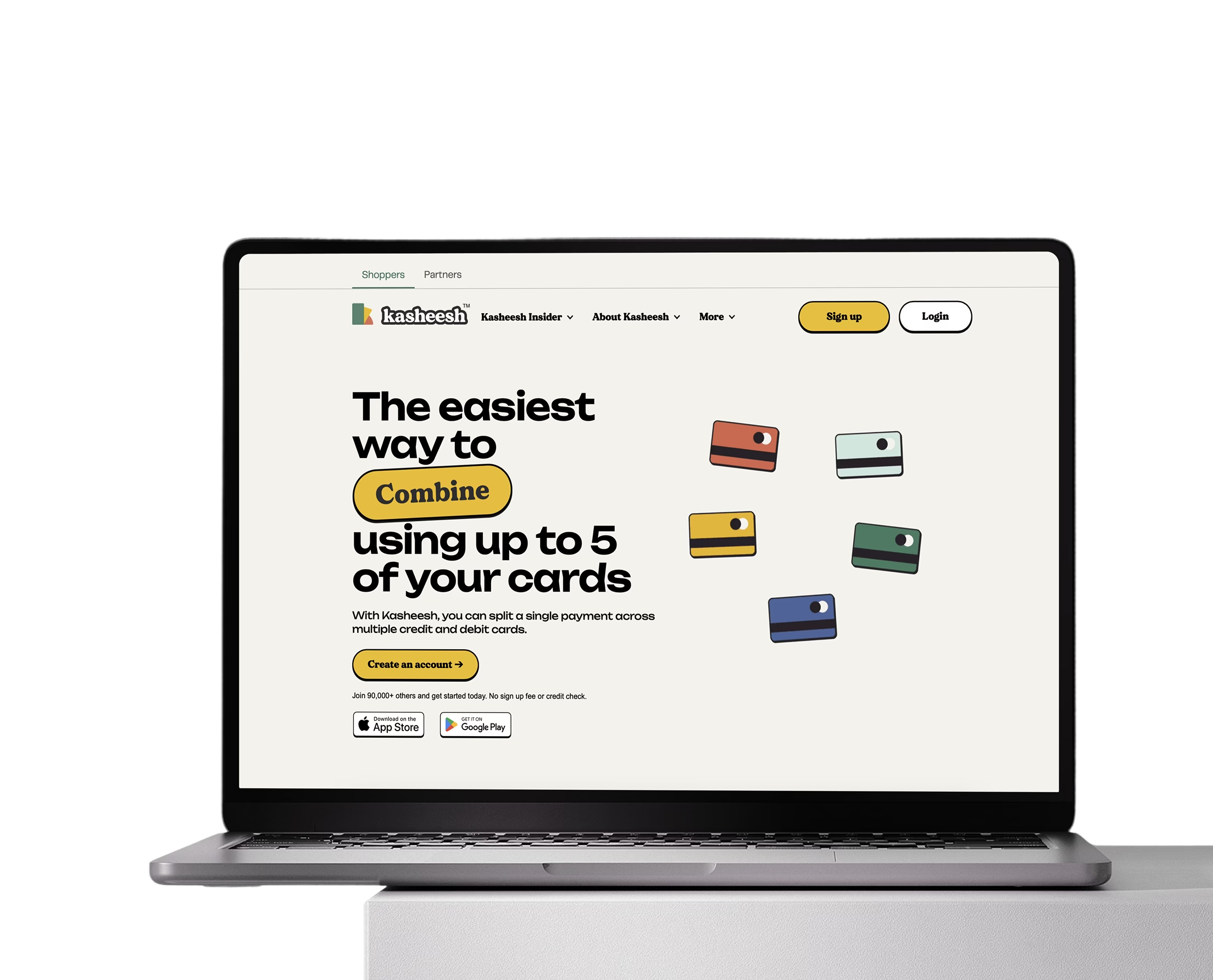
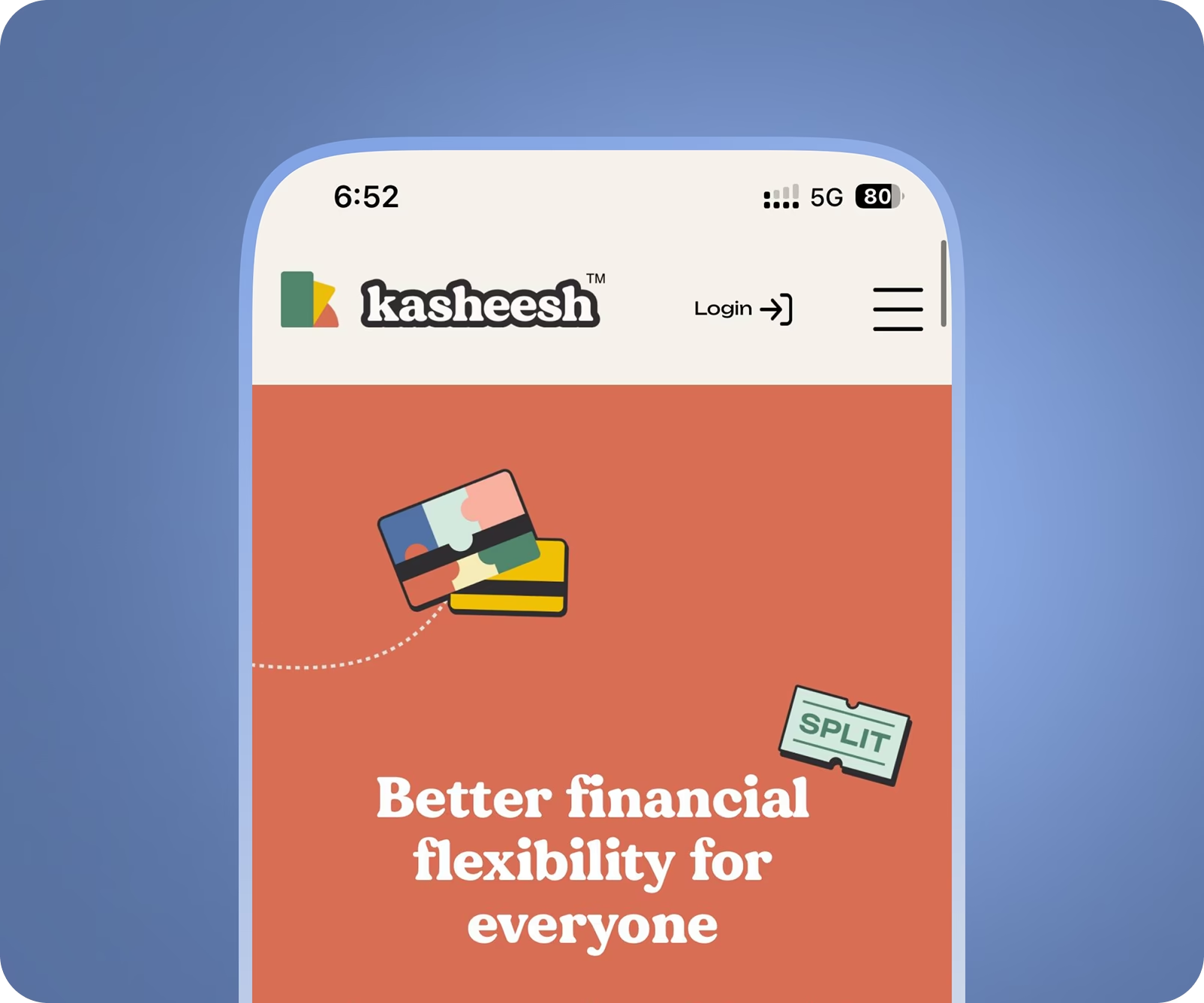
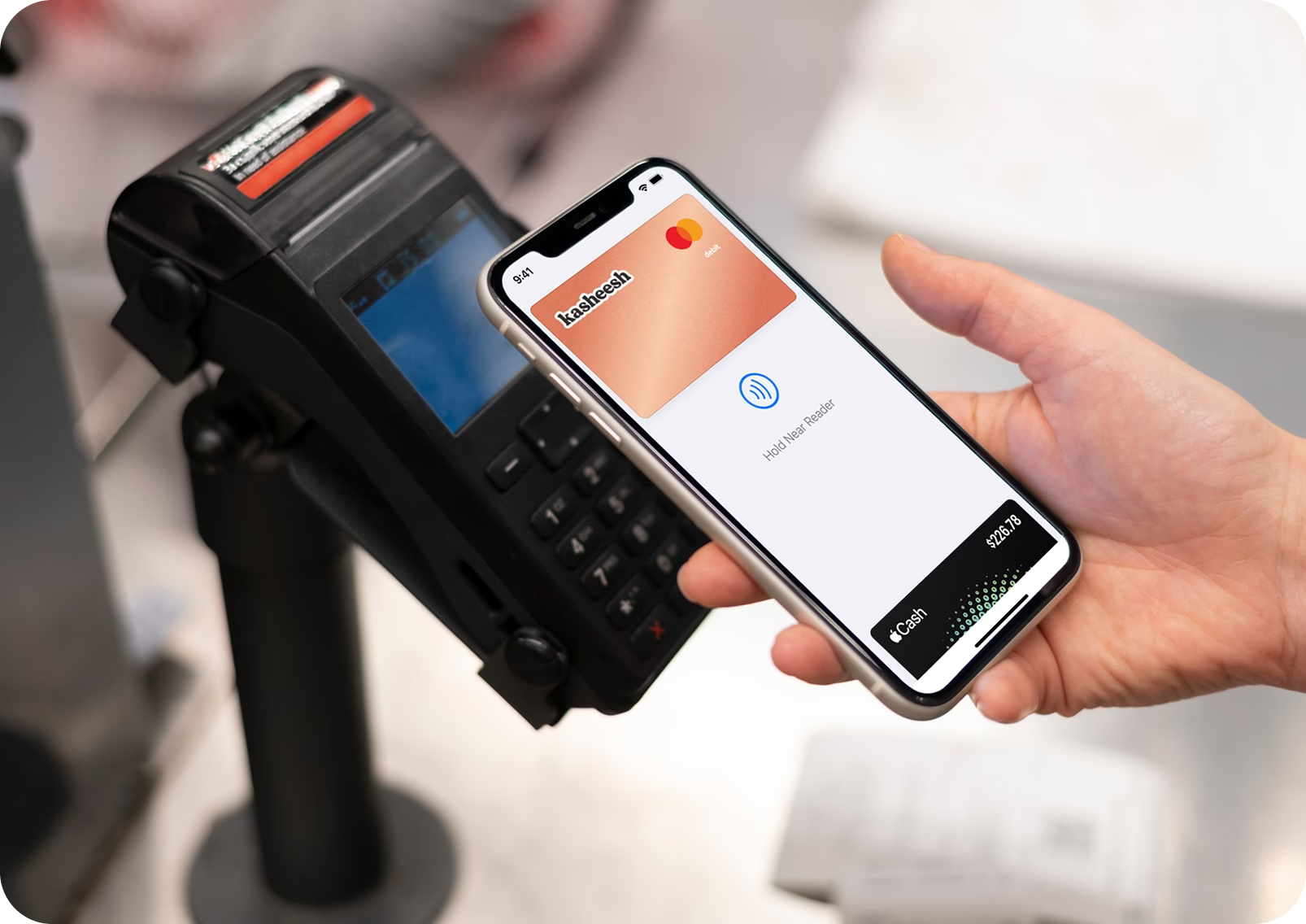
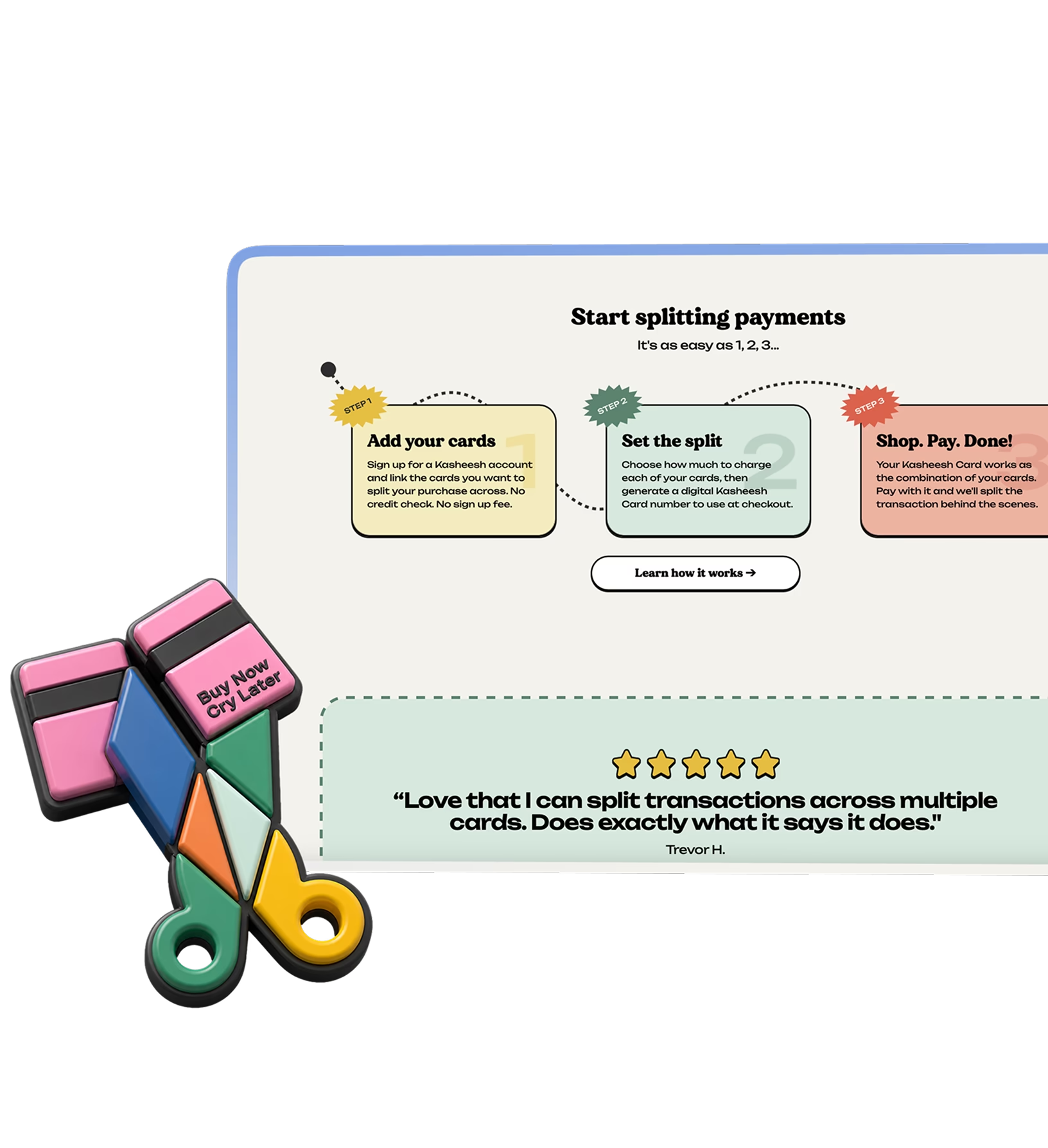
Kasheesh is a U.S.-based fintech application that lets users split a single purchase across multiple credit, debit, and gift cards using a virtual card.
As the platform expanded, the client faced two growing challenges. The Flutter application was maintained by a single engineer, creating a dependency on one contributor for technical decisions and implementation. At the same time, introducing new functionality and financial integrations required additional effort to evaluate compatibility, research documentation, and implement supporting libraries.
The client chose to migrate the app to React Native to make ongoing development easier and reduce reliance on a single contributor.
Project in facts
- Fintech
- USA
- 3 React Native developers, Fullstack developer, QA
- July 2025 – ongoing
- Ruby on Rails development, React Native development
- Ruby on Rails, PostgreSQL, Firebase, React Native, Expo (SDK), TypeScript, Expo Router, Zustand
Challenge
Kasheesh’s growth was constrained by its mobile development setup. The Flutter application had become heavily dependent on a single contributor. As a result, technical knowledge, implementation decisions, and development planning were not broadly shared across the team.
This created a single point of failure, reduced visibility into the product, and made it difficult to scale development efforts as the platform evolved and new functionality was introduced.
Product goals
- Restore visibility and control over the mobile application
- Expand the product with onboarding, KYC, card management, and wallet functionality
- Integrate payment processing, bank account linking, and identity verification services
Solutions
We began with a code audit. The engineer who conducted the discovery phase stayed on as the project’s tech lead.
Our developers expanded the platform with a backend-driven onboarding, KYC flow, card management, wallets, advanced transaction filtering, and notifications. To support the product’s multi-source funding model, we integrated necessary fintech stack while keeping transaction rules configurable on the backend.
As the engagement evolved, we assumed QA ownership and initiated a frontend migration from Rails to Next.js using a Turborepo architecture to enable code sharing between mobile and web apps.
App rewrite
Rebuilt the app in React Native in 3 months, replacing Flutter with full feature parity.
Fintech ecosystem
Integrated Stripe, Plaid, Marqeta, and top banking APIs for multi-source funding.
QA & web migration
Took over QA and migrated the frontend to Next.js with Turborepo for shared code.
Engineering approach
The mobile app was rebuilt from Flutter to React Native with TypeScript and Expo.
We integrated Stripe for payment processing, Plaid for bank linking and identity verification, Marqeta for virtual card issuing, and Treasury Prime and Modern Treasury for banking operations. Together, these integrations support the product’s core capability of splitting a single purchase across multiple funding sources while keeping transaction rules configurable on the backend.
Automated deployment pipelines, Expo over-the-air updates, Firebase services, and dedicated QA preview builds provide a reliable development and release process for ongoing product evolution.
Business impact
Result
The mobile application was migrated from Flutter to React Native within three months while preserving the product’s core functionality.
-
Migration with zero downtime
The mobile application was fully rewritten with full feature parity, giving the client improved development velocity and engineering transparency. -
Expanded functionality
Delivered a backend-driven onboarding and KYC system, card management, wallet capabilities, advanced transaction filtering, and notification integrations. -
Multi-source payment infrastructure
Deployed secure integrations with Stripe, Plaid, Marqeta, Treasury Prime, and Modern Treasury, allowing users to reliably split a single purchase across multiple funding sources.
Need to migrate a mobile application to React Native?
Please fill out this form, and our manager will contact you within one business hour. If necessary, we can sign an NDA and begin project discussions.

Thank you.
Your message has been sent successfully!
We’ll get in touch with you within 24 hours, excepting requests received on Saturday, Sunday.