Engineering a drone
inspection platform
Contributed to the development of one of the leading infrastructure inspection platforms. As a long-term engineering and design partner, Rubyroid Labs helped evolve the platform architecture, modernize user-facing applications, develop large-scale image-processing capabilities, and integrate enterprise systems.
Business context
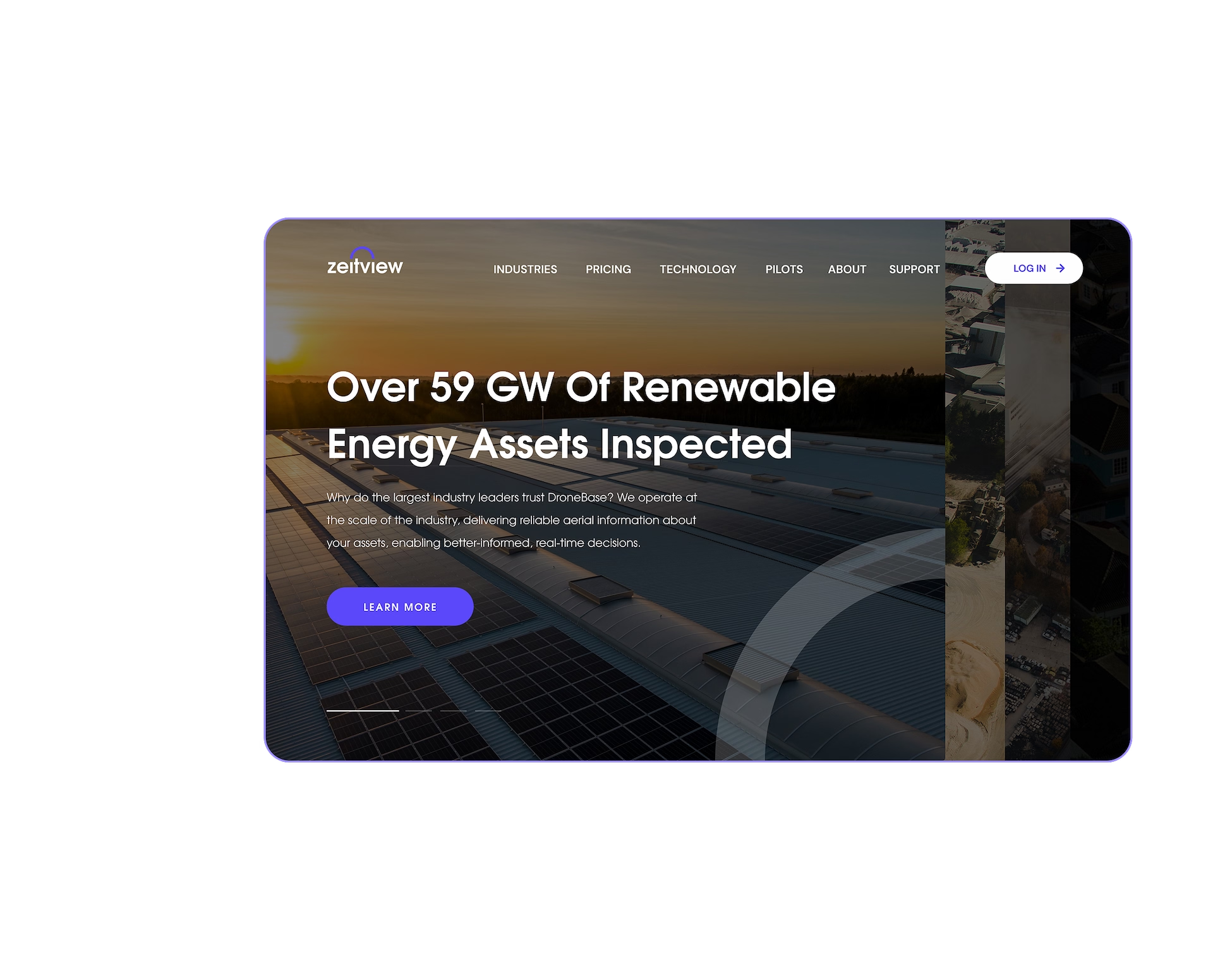
Zeitview, formerly DroneBase, is a leading provider of inspection software for critical infrastructure. Its platform helps enterprise customers capture, process, and analyze aerial inspection data across more than 80 countries and over 200,000 inspected assets.
The platform supports inspection workflows across renewable energy, utilities, telecommunications, construction, and commercial real estate.
Rubyroid Labs joined the project in 2018 as an embedded engineering and design partner and has continued contributing to the platform's development ever since.
Project in facts
- Drone, Telecom, Oil & Gas
- USA
- 7 fullstack (RoR/React) developers, Java developer, 4 UI/UX designers, 4 QA
- February 2018 – ongoing
- Ruby on Rails development, React JS development, UX/UI design
- Ruby on Rails, React.js, AWS, Sidekiq, ElasticSearch, Electron
Challenge
In 2018, DroneBase was growing rapidly but lacked the engineering capacity to keep up with an expanding product roadmap. The company needed a long-term technology partner that could integrate seamlessly with its internal team and accelerate product development.
As the business expanded into new industries and inspection workflows, the platform evolved into a complex, multi-product system serving drone pilots, enterprise customers, administrators, and infrastructure operators. Supporting this growth required scalable image-processing pipelines, enterprise integrations, and a shared backend architecture that could power multiple applications without duplicating business logic.
In 2023, the company rebranded from DroneBase to Zeitview to align its brand with its broader inspection technology portfolio. This required a unified design system to ensure cross-application consistency while continuing to scale the platform and accelerate feature delivery.
Product goals
- Establish a centralized backend shared across multiple products
- Simplify large-scale drone imagery upload and processing
- Support enterprise inspection and asset-management workflows
- Integrate third-party systems used by enterprise customers
- Improve operational efficiency for pilots, clients, and administrators
- Standardize the user experience through a shared design system
- Enable AI-assisted defect detection within inspection workflows
Solutions
We contributed to the Ruby on Rails development of several interconnected products that share a common backend.
To improve internal operations, we participated in the development of a new React-based administration platform that replaced legacy tooling with a more maintainable frontend architecture.
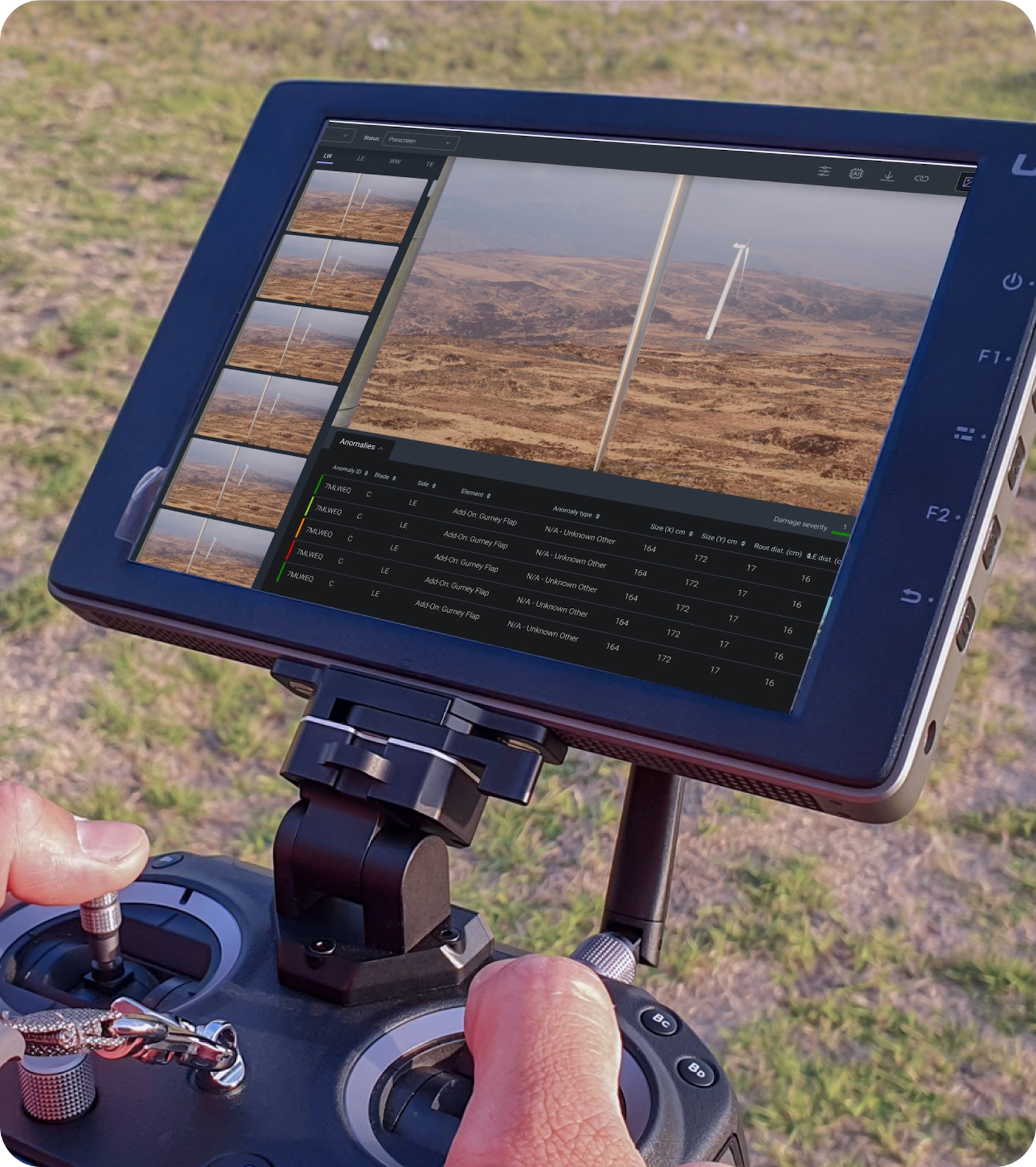
For field operations, we built an Electron-based cross-platform desktop application that enables drone pilots to upload, inspect, sort, and synchronize inspection images and videos with the platform.
Our Ruby on Rails developers also contributed to image processing by implementing orthomosaic stitching, allowing multiple aerial images to be combined into a single high-resolution map for inspection and analysis.
Alongside product development, our designers helped establish a shared design system that standardized UI components across applications and supported the ongoing migration from Ember.js to React.
Unified backend core
Centralized Ruby on Rails API serving multiple applications
Frontend modernization
React administration platform, Ember.js-to-React migration, and a shared design system
Image processing
Cross-platform desktop application and orthomosaic stitching for inspection workflows
AI-assisted inspections
Backend services supporting AI-powered image analysis
Engineering approach
At the core of the platform is a centralized Ruby on Rails API that serves multiple applications. Consolidating business logic into a single backend reduced duplication and simplified the rollout of new functionality.
Inspection workflows rely on location-based information. By using PostgreSQL with PostGIS, the platform manages mission data, asset locations, imagery coverage, and geospatial search at scale.
The platform's original web applications were built with Ember.js, which became difficult to maintain. To improve maintainability and developer productivity, Zeitview adopted a gradual migration to React.
AI-assisted development is integrated into the team's daily workflow as part of the client's engineering standards. Our developers use tools such as GitHub Copilot, Claude Code, and Codex to accelerate delivery.
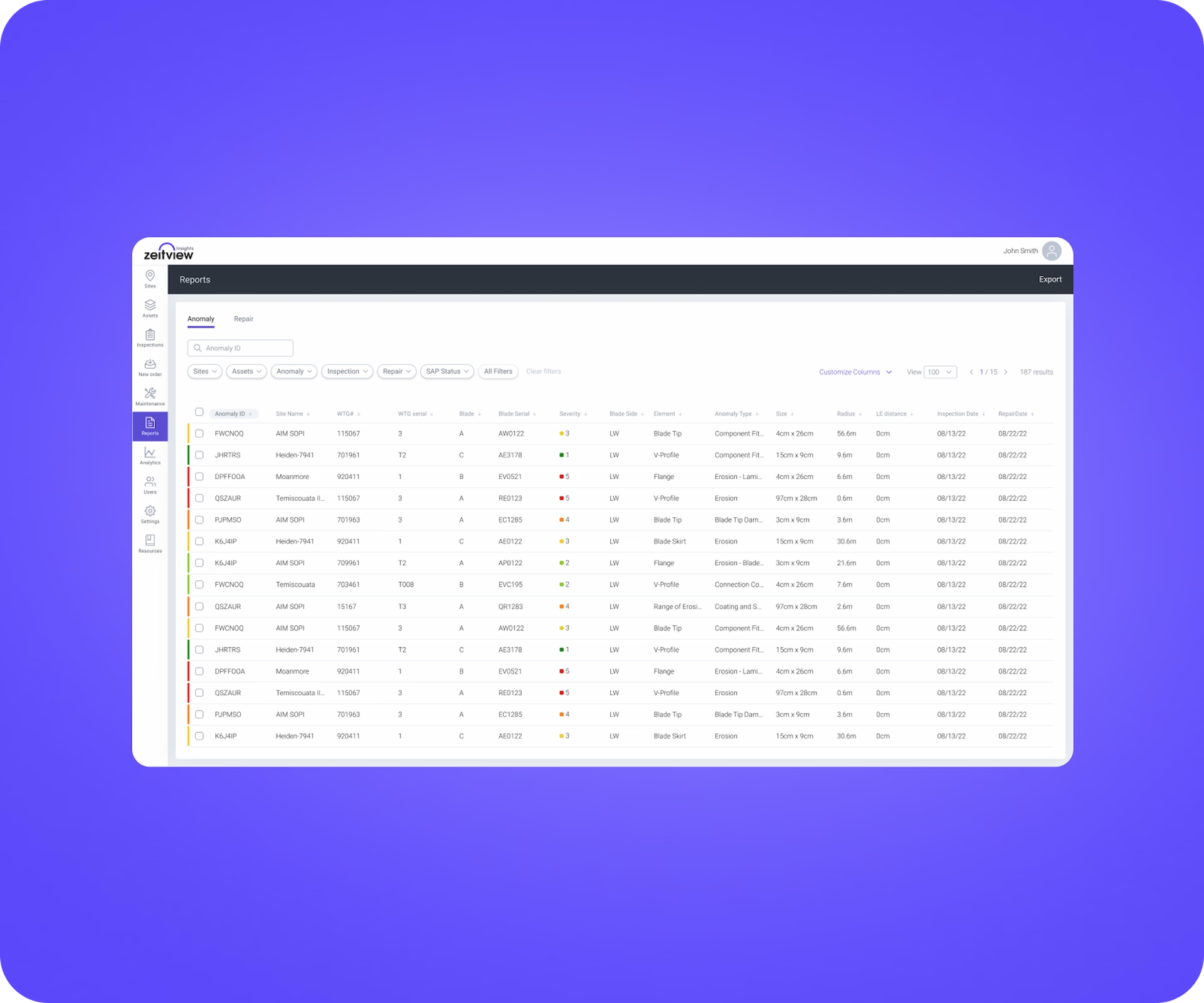
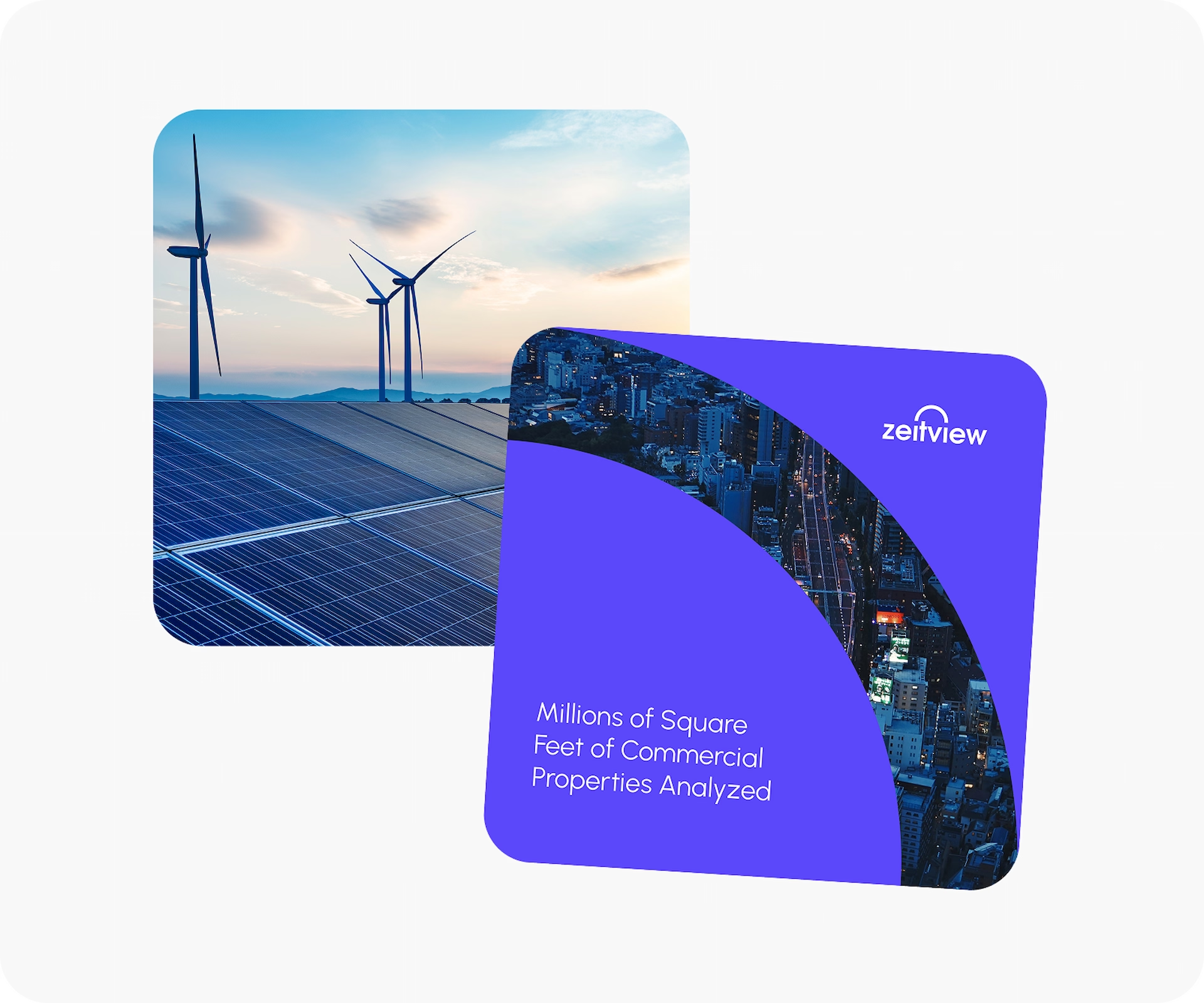
Large drone datasets are processed through asynchronous workflows powered by background jobs, cloud storage, and distributed processing services, allowing image-processing tasks to run without affecting application performance.
Our team engineered and enhanced critical enterprise integrations, including Salesforce, Ericsson, Pointivo, Airbus, Auth0, Zendesk, ESRI, Azure, and other external services used throughout inspection and asset-management workflows.
We expanded the client's payment infrastructure through Stripe and PayPal by configuring and supporting multiple regional Stripe entities for the United States, Germany, the United Kingdom, India, and Canada.
Business impact
Result
Since 2018, Rubyroid Labs has been an embedded engineering and design partner, working alongside Zeitview's internal team to continuously develop and modernize the platform.
Over the course of the partnership, our team has contributed to the evolution of a shared multi-product architecture, modernization of the frontend, and the expansion of the platform's inspection capabilities.
Today, we continue to support the platform's development by delivering new functionality, maintaining existing systems, and contributing to its ongoing evolution.
-
Unified multi-product platform
Multiple applications and operational workflows are supported through a shared backend architecture and centralized business logic. -
Modernized product ecosystem
React-based applications and a shared design system improved maintainability, consistency, and development efficiency. -
Integrated inspection intelligence workflows
Enterprise integrations, global payment infrastructure, orthomosaic image processing, and AI-powered analysis capabilities enable operators to manage asset health through a single ecosystem.
The most impressive factor about Rubyroid Labs has been how excited the team is to work with us. Their enthusiasm has been much appreciated as Rubyroid Labs has helped us build the company.
Tomas Becklin, CTO Drone Base, USA 
Need a centralized backend for multiple products?
Please fill out this form, and our manager will contact you within one business hour. If necessary, we can sign an NDA and begin project discussions.

Thank you.
Your message has been sent successfully!
We’ll get in touch with you within 24 hours, excepting requests received on Saturday, Sunday.